Table of Contents
Losing money to a scam is stressful enough. Finding a company that claims it can help recover those funds can make the situation even more confusing. While some recovery companies offer structured assistance, others target victims with false promises.
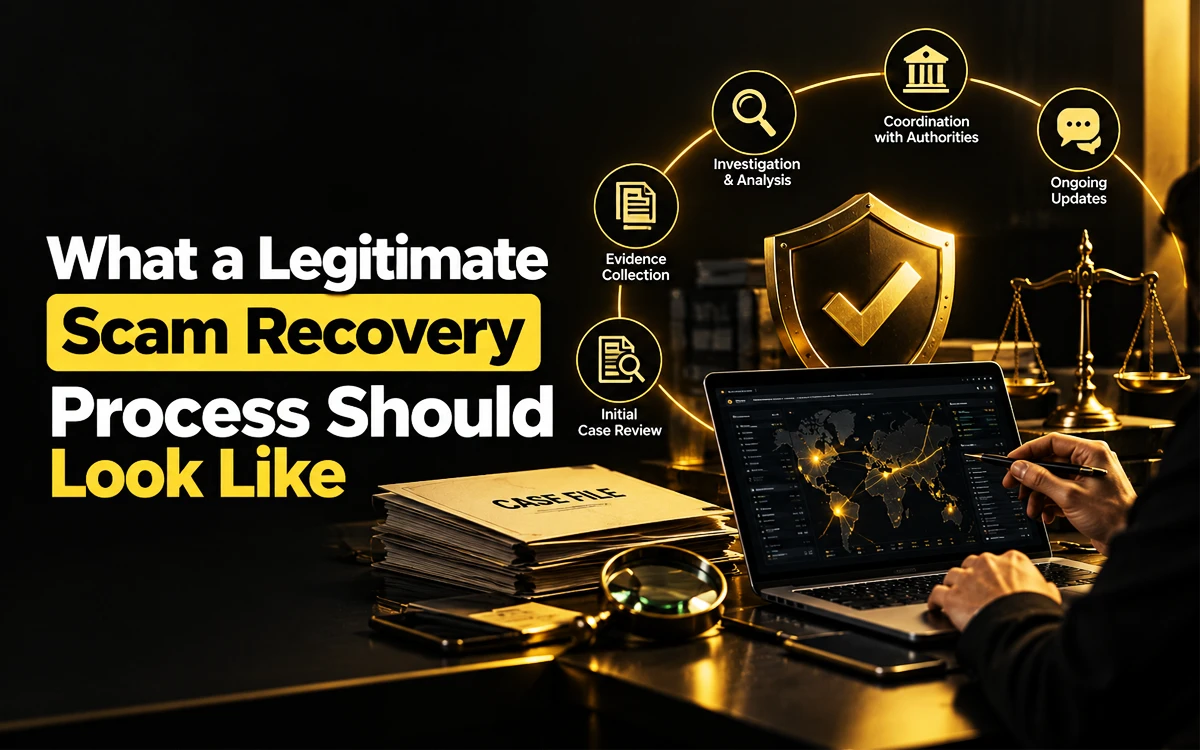
So, what should a legitimate scam recovery process actually look like? It should begin with a careful review of your case, followed by evidence collection, fund or transaction analysis, and an assessment of possible recovery options. Clear communication and realistic expectations should guide every stage.
In this guide, you'll learn how scam recovery investigations work, which warning signs to watch for, what evidence to preserve, and how to evaluate a recovery service before sharing information or paying for assistance.
Not all financial fraud recovery services follow the same approach. The table below answers the question, “How can I tell if a recovery company is legitimate?” by highlighting the key differences between trustworthy practices and potential warning signs.
|
Legitimate Recovery Process |
Warning Signs |
|---|---|
|
Review the details of your case before suggesting next steps. |
Promises to recover your money before assessing the case. |
|
Explains the recovery process and the actions that may be possible. |
Makes vague claims about special methods or guaranteed results. |
|
Requests relevant documents and transaction records. |
Asks for private keys, wallet recovery phrases, or account passwords. |
|
Sets realistic expectations about possible outcomes. |
Guarantees a full refund or a specific recovery amount. |
|
Explains its fees, terms, and payment requirements clearly. |
Demands unexplained payments or uses hidden charges. |
|
Allows time to review the information and make decisions. |
Creates urgency or pressures you to pay immediately. |
|
Provides clear updates and answers questions about the case. |
Avoids questions, gives inconsistent answers, or provides no meaningful updates. |
Before choosing a service for scam recovery assistance, compare how the company handles your case with the warning signs discussed.
A legitimate scam recovery service should help victims understand their situation on the basis of evidence available. In case you face the question, is scam recovery guaranteed? The answer is no. The process should be clear from the beginning, with no pressure to make decisions based on promises of guaranteed results. Look for these essential signs:
These standards provide a useful starting point for evaluating a recovery company before entrusting it with your case. Before considering a recovery service, individuals should understand its process, review its terms, and assess whether the proposed assistance is appropriate for their situation.
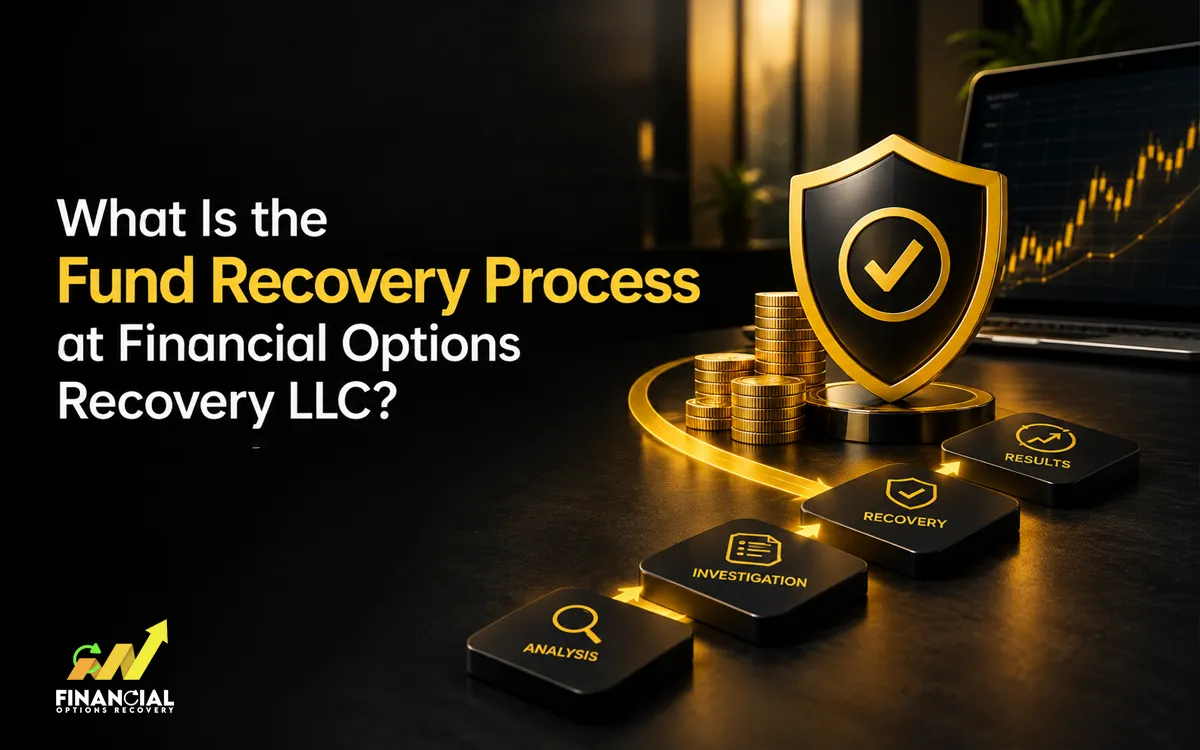
Financial Options Recovery LLC helps individuals assess financial fraud cases and understand potential recovery options. The process involves reviewing case details, examining available evidence, assessing fund movements, and identifying relevant channels for further action. Each case is evaluated individually, with clear communication and realistic expectations throughout the process.
Financial Options Recovery LLC follows a structured approach to reviewing reported financial fraud cases. The focus is on understanding the circumstances, examining the available evidence, and identifying possible next steps based on the information provided.
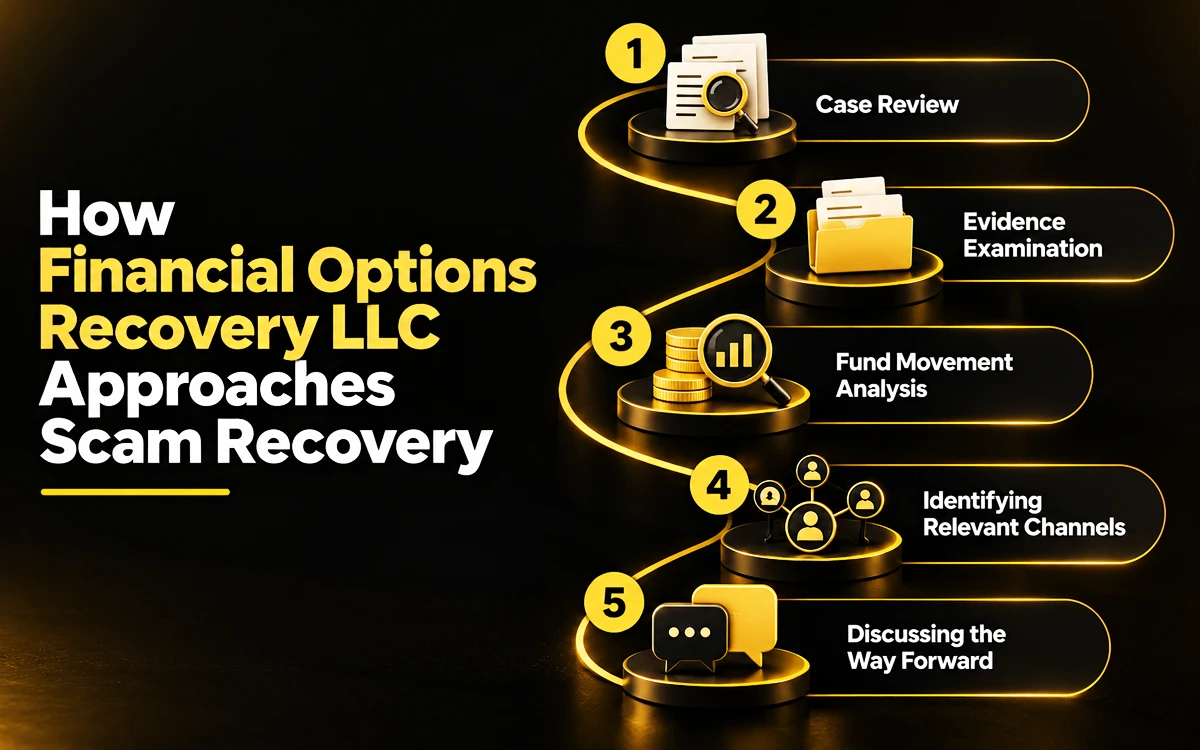
Every recovery case begins with understanding how the financial loss occurred. The initial review considers the type of scam, the amount lost, payment dates, and the platforms involved. It also examines what the scammer promised, how the victim was persuaded, and whether withdrawals were blocked or additional payments demanded.
These details help establish a timeline and identify areas that need further examination. Financial Options Recovery LLC takes a case-specific approach, assessing the circumstances reported by the victim before discussing possible recovery options.
A clear understanding of a scam depends on the records available. Relevant documents may include bank statements, payment confirmations, transaction IDs, wallet addresses, platform screenshots, emails, and chat messages. These records help connect payments to specific events and establish when the loss occurred.
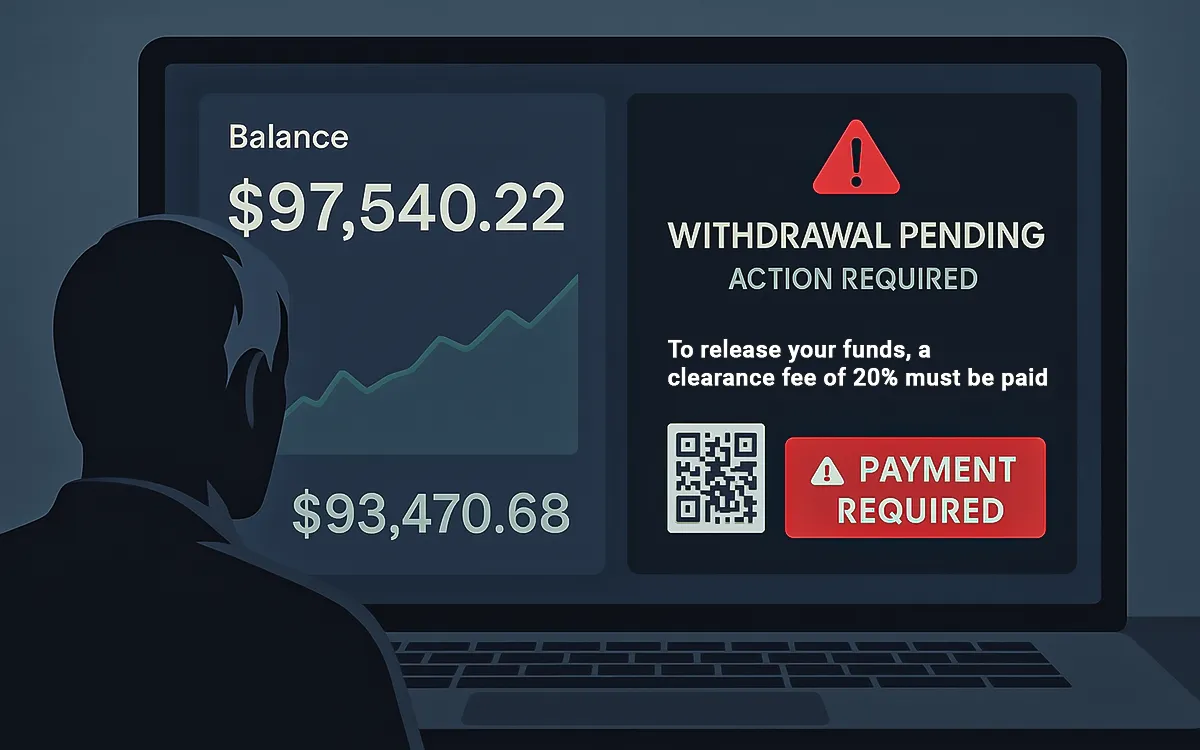
For example, a withdrawal request followed by a demand for an additional tax payment may reveal how a fraudulent platform operated. Preserving original records helps maintain important details for further review. The evidence is examined to establish what can be supported by documentation and what remains uncertain. Private keys, wallet recovery phrases, and account passwords should never be shared.
Understanding where money went can help determine which recovery options may be relevant. Depending on the case, the review may involve payment trails, recipient details, or blockchain transactions. For cryptocurrency cases, transaction analysis can map transfers between wallet addresses using transaction IDs, amounts, timestamps, and connected activity.
Traditional financial fraud cases may require examining bank transfers and payment provider records. This analysis can help clarify fund movements and identify potentially relevant platforms or institutions. However, tracing a transaction does not automatically identify the person controlling an account or establish that the funds can be recovered.
After reviewing the available evidence, the next step is to identify channels that may be relevant to the case. These could include a bank, payment provider, cryptocurrency exchange, reporting agency, or another appropriate party. For example, a recent bank transfer may require a different response from cryptocurrency sent through several wallets.
The available options depend on the payment method, timing, supporting records, and parties involved. Any further action remains subject to the relevant institution's procedures and decisions.
Once the review is complete, the findings can help clarify potential next steps. This involves explaining what the evidence shows, identifying missing information, and outlining possible options alongside their limitations. Some cases may require additional documentation, while others may depend on third parties whose decisions cannot be controlled.
The aim is to help clients understand what may be worth pursuing without creating expectations of a guaranteed outcome. Clear communication also allows clients to ask questions and make informed decisions. A realistic assessment of the available options is an important part of navigating the cryptocurrency recovery process after financial fraud.Recovery may take time, and some cases may have limited options. Clear communication helps you understand the progress of the process without relying on unrealistic assurances.
Ultimately, a legitimate investment scam recovery process should give you a clearer picture of your situation and the steps that may be available. Before engaging any fund recovery service, make sure you understand its process, the costs involved, and the limitations of what it can do.
Before engaging any recovery company, take time to evaluate its process, claims, and terms. Asking the following questions can help you make a more informed decision:
The answers can help you understand how the company operates and whether its claims are reasonable. Verify important details independently, review the written agreement before making a payment, and be cautious of pressure tactics, unexplained charges, or promises of guaranteed recovery.
Knowing how to identify a legitimate recovery service is only one part of responding to financial fraud. Once you discover that you've been scammed, your next steps can be equally important in protecting your accounts, preserving evidence, and understanding what options may still be available. The right response depends on how the money was transferred, whether your accounts were compromised, and what information you have about the transaction.
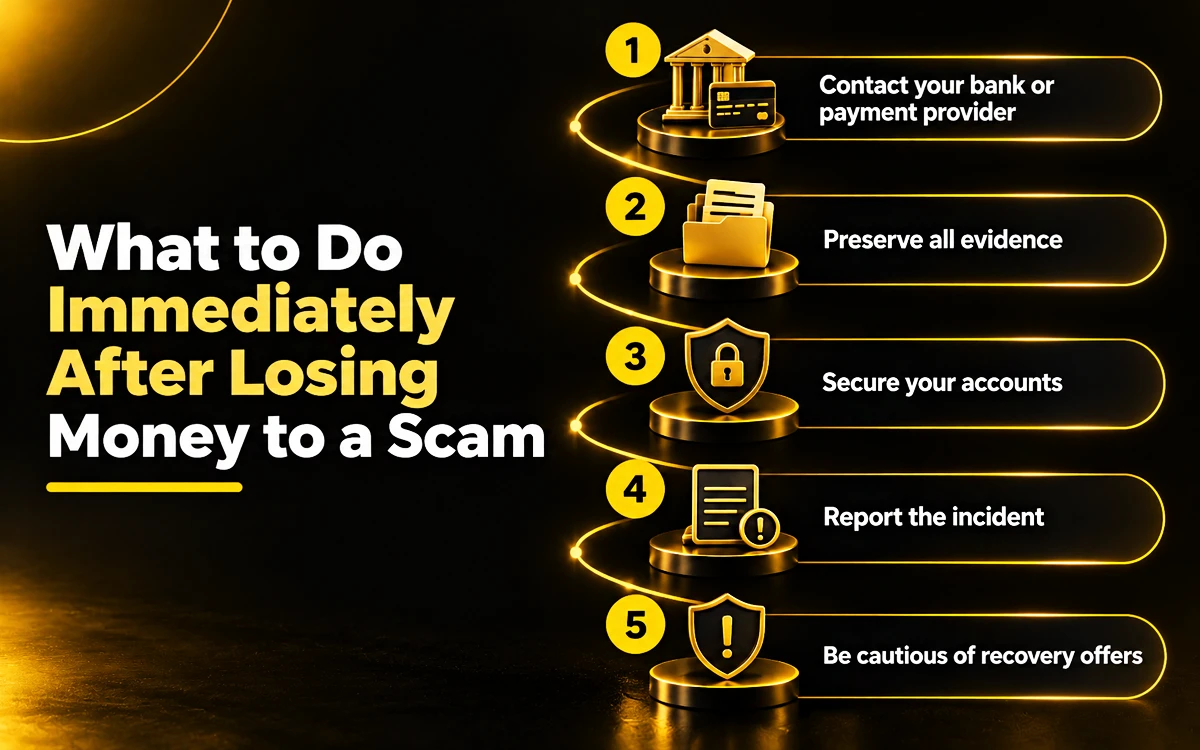
Taking a structured approach can help you avoid further losses while preparing to report the incident and explore possible next steps. If you discover that you've been scammed, taking prompt, practical steps may help preserve evidence and identify available options.
Acting quickly does not guarantee recovery, but it can help you protect accounts, preserve records, and explore the options available in your situation.
Understanding the scam recovery process can help you make informed decisions after a financial loss. Reviewing available evidence, verifying recovery service claims, and contacting the relevant financial institution or reporting authority are important steps to consider. Since every case is different, potential recovery options and their limitations should be assessed carefully.
If you have lost money to a financial or cryptocurrency scam, contact us for a case review to discuss your situation and understand the possible next steps. Recovery is not guaranteed, and any options depend on the details and evidence available.
Fund recovery involves reviewing the scam, examining evidence, and tracing transactions where possible. The findings help identify potential next steps, although recovery is never guaranteed.
Timelines depend on the scam type, payment method, evidence, and third-party involvement. Complex cases may take longer, and no legitimate company can guarantee a fixed recovery timeline.
Expect a clear process, evidence-based assessment, transparent fees, realistic expectations, and regular communication. Avoid companies that guarantee recovery or pressure you into immediate payments.
They review the circumstances, examine available evidence, assess fund movements, and identify possible next steps. Their approach depends on the case, without promising specific recovery outcomes.
It should provide a clear case assessment, explain its process, disclose applicable fees, protect sensitive information, and outline realistic options without guaranteeing that lost funds will be recovered.