Table of Contents
A crypto user must always know the status of his crypto wallet. Crypto wallets allow you to store your cryptocurrency and trade in the crypto market with ease. Scammers understand the importance of crypto and its volatility. Even seasoned crypto users easily become victims of crypto scams.
When you are unable to withdraw crypto from a frozen wallet, consider you have come across an online crypto scam. Losing your hard-earned money through these deceptive tactics is very frustrating. However, you can still recover your stolen crypto from a crypto wallet scam if you act fast.
This article will help you understand the concept of a frozen crypto wallet, what to do if your crypto wallet is frozen, how to unfreeze it, and different ways to prevent your account from being frozen.
“A frozen crypto wallet is a wallet where access to funds or withdrawals is temporarily or permanently restricted due to security checks, technical issues, or suspected fraudulent activity.”
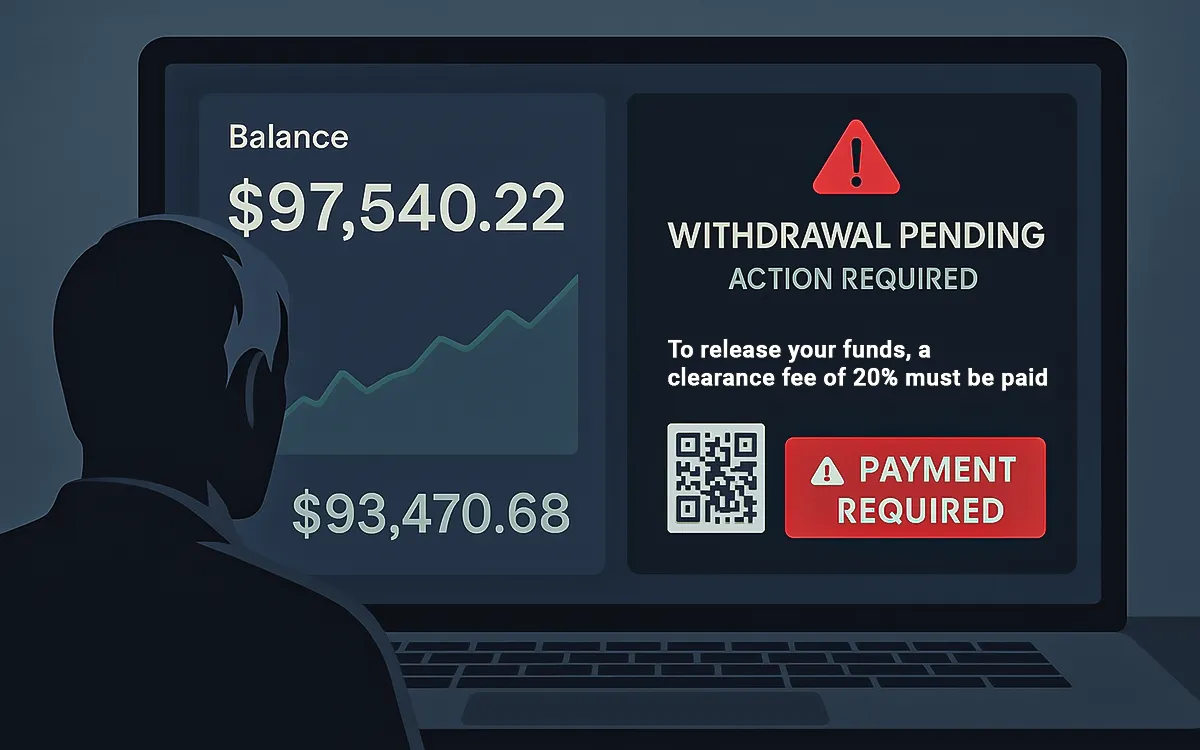
For example, an exchange may temporarily restrict withdrawals while reviewing unusual activity or completing identity checks. In a scam, a fake platform shows a large balance but blocks withdrawals and demands additional taxes, fees, or verification payments before releasing the funds.
As per Chainalysis, in the first quarter of 2025, about $1.7 billion was lost. These numbers are bound to increase as most avoid reporting scams to higher authorities.
One of the recent fake crypto exchange examples is that of FTX. The FTX not only mismanaged its crypto users' funds but also denied crypto access. Similar to this, there have been real incidents where victims had their wallets frozen and crypto withdrawals blocked, causing significant financial losses and emotional distress.
The crypto market is highly volatile, and it does not offer guaranteed unrealistic returns. Any crypto exchange or crypto trading firm offering such promises is a scam. The sales agent uses high-pressure tactics and coercive language, allowing no chance to think it over; it is a scam.
If the sales agent focuses on how much money you would be making instead of how your money would be allocated in the business and how the business model works, then it is a scam.
A restricted withdrawal does not always mean your wallet has been frozen. Legitimate platforms may temporarily block transactions for security, compliance, or technical reasons. However, scammers can also use fake wallet freezes to pressure users into making additional payments.
Crypto funds are locked for legitimate reasons, but certain demands and behaviors can indicate a fake wallet freeze.
|
Signs of a Legitimate Account Restriction |
Warning Signs of a Fake Wallet Freeze |
|
Security review triggered by unusual activity |
Demands for withdrawal or unlock fees |
|
KYC, or identity verification, is required. |
Fake tax or compliance payment requests |
|
Compliance checks are being completed. |
Pressure to pay immediately |
|
Suspicious transaction activity is under review. |
Unverifiable customer support |
|
Account restrictions are explained by the platform. |
Fake or inflated account balances |
|
Network or technical issues affect withdrawals. |
Promises of guaranteed access after payment |
|
Platform-specific withdrawal limits apply. |
Requests for private keys or recovery phrases |
|
A clear process is provided to resolve the restriction. |
Repeated demands for additional payments |
These are some basic reasons for your queries like why the crypto platform won't let me withdraw.
The crypto wallet scam or crypto withdrawal scam is quite frequent and popular in the crypto market. These are the red flags in these scams:
Delayed or denied withdrawals
No customer support or shady KYC requirements
Fake platforms posing as legit exchanges
As mentioned earlier, if the crypto exchange or crypto trading account is genuine, your crypto account might be frozen due to legal implications or for safety purposes.
The crypto exchange or the crypto trading firm may freeze your account due to illegal attempts to gain access to your crypto wallet. They freeze your crypto wallet to safeguard your financial interests.
Illegal crypto exchanges and crypto trading firms will freeze your crypto account for malicious intent. They are just interested in bleeding you financially and not securing your financial interests. In such a scenario, scammers try to deny access to your crypto wallets permanently.
A frozen crypto account can leave you with the question, “What Should I Do If My Crypto Account Is Frozen?" It keeps you unsure about what happened to your funds or what to do next. A fake platform uses a supposed account freeze to create pressure and demand more money.
The safest approach is to verify the restriction, protect your remaining assets, and preserve evidence before taking further action.
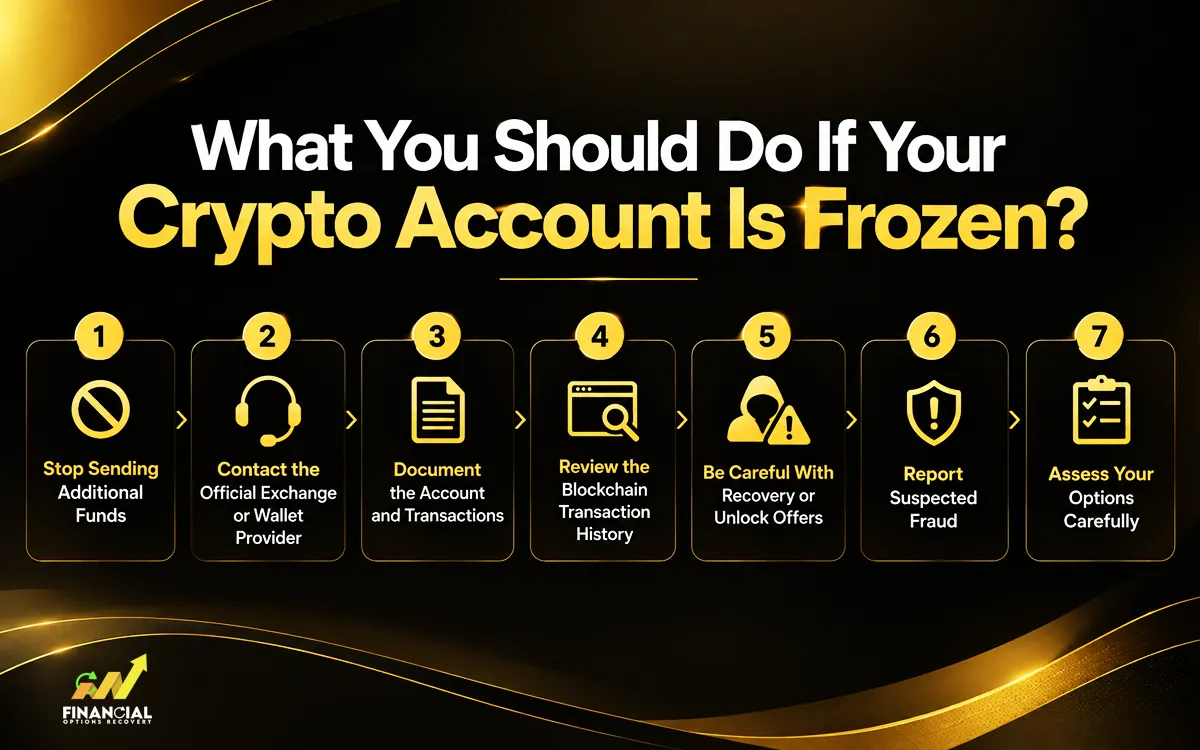
Do not send more cryptocurrency simply because someone claims it will unlock your account. Scammers often describe payments as withdrawal fees, taxes, verification charges, or compliance deposits. Once one payment is made, another charge may follow.
A legitimate platform should be able to explain its requirements through an official channel. Verify the reason for any payment independently before transferring additional funds.
Use the platform's official website or application to find its customer support details. Do not rely on phone numbers, email addresses, or messaging accounts sent to you through social media or private chats.
Ask the provider why the account has been restricted and whether there is a formal process for resolving the issue. Keep copies of support tickets and responses. These records may also help establish what happened later.
Preserve as much information as possible while it is still available. Save screenshots of your account balance, withdrawal attempts, error messages, platform details, emails, and conversations with support staff.
Also record transaction IDs, wallet addresses, cryptocurrency type, network used, amounts, and relevant dates and times. Avoid editing or deleting original communications. A clear timeline can make it easier to understand how the funds moved.
A wallet showing a balance does not necessarily mean the funds are still available for withdrawal. Where the transaction occurred on-chain, the relevant blockchain records can help show whether assets were transferred and which addresses received them.
Review the transaction hash, sending address, receiving address, amount, timestamp, and network. Multiple transfers can make the movement of funds more difficult to follow, so preserve each relevant transaction rather than relying only on the platform's account history.
A person claiming to recover your funds may contact you after the initial incident. Be especially cautious when they promise guaranteed frozen crypto account recovery, claim to have identified the scammer, or request an upfront payment.
Do not provide private keys, seed phrases, passwords, authentication codes, or remote access to your device. A second scam can cause further financial loss after the original incident.
When the restriction appears to be part of a scam, preserve your evidence and consider reporting the incident through the appropriate channels. Depending on the circumstances, this may include the exchange involved, your financial institution, relevant government agencies, or cybercrime reporting authorities.
Reporting does not guarantee that funds will be recovered. However, accurate records can help authorities and service providers understand the incident and assess what action may be available.
Complex cases may involve several wallets, blockchain networks, exchanges, or jurisdictions. In these situations, a qualified legal, financial, or technical professional may help review the circumstances and explain the available options.
The possibility of tracing or recovering funds depends on factors such as how the assets moved, whether they reached an identifiable service, how quickly the incident was reported, and what evidence remains available.
The key point is to avoid making another payment out of panic. Verify the restriction, preserve your evidence, secure your accounts, and understand the situation before deciding what to do next.
The legitimate exchange may require identity verification, a security review, or additional compliance information before restoring withdrawals. A self-custody wallet is different because the wallet itself usually does not have a central authority that can simply “unfreeze” it.
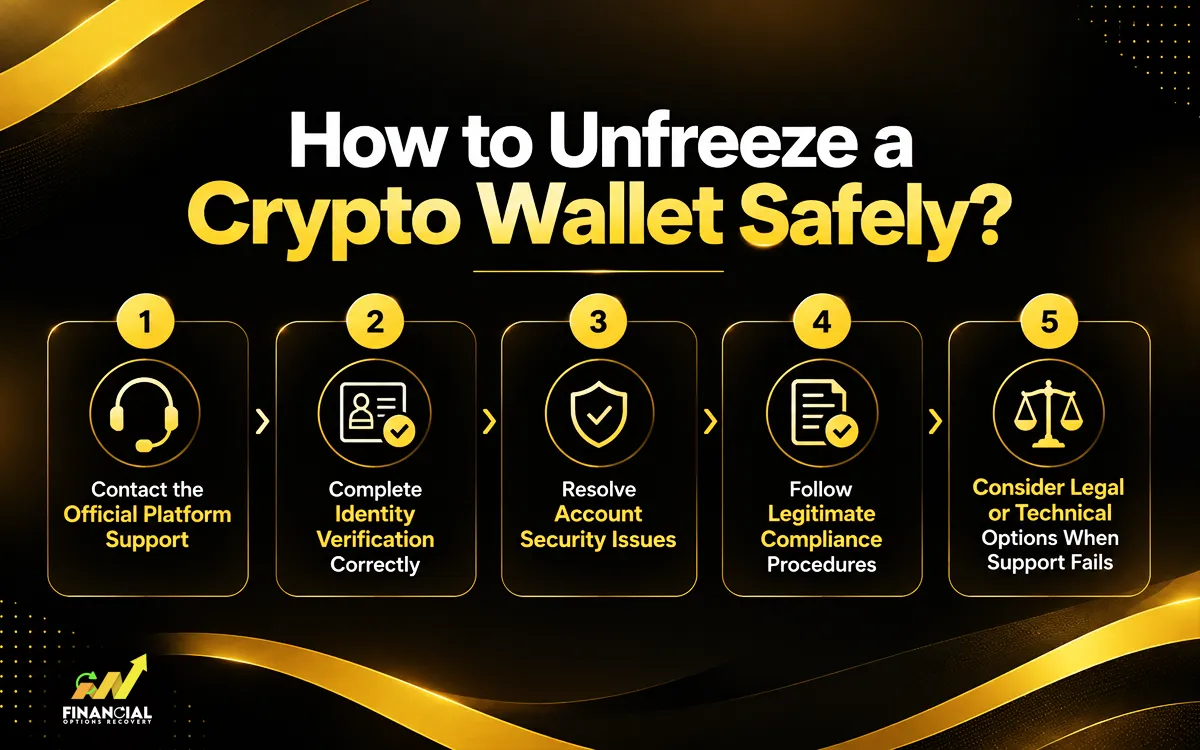
When the restriction involves an exchange or custodial wallet provider, contact its support team through the official website or application. Ask why withdrawals have been restricted and what steps are required to resolve the issue.
Avoid support accounts contacted through social media, messaging apps, or unsolicited emails. Scammers often impersonate customer-service representatives and offer to “unlock” accounts for a fee.
The platform may require KYC or other identity checks before allowing certain transactions. Provide information only through the provider's verified platform and follow its stated verification process.
Be cautious when someone asks you to send identity documents, passwords, private keys, or recovery phrases through an unofficial channel. Legitimate verification should not require you to reveal your seed phrase or private key.
An account may be restricted after unusual login activity, suspected unauthorized access, or suspicious transactions. Check your account security settings, change compromised passwords, enable available multi-factor authentication, and review recent activity.
When you believe someone has accessed your account, secure the account before attempting further transactions.
Some platforms may restrict withdrawals while reviewing transactions or meeting regulatory and compliance obligations. Ask the provider what information or documentation is required and whether the restriction has a defined review process.
Do not assume that every request for a “tax,” “unlock fee,” or “compliance payment” is legitimate. Verify the requirement directly with the platform before sending money.
When official support does not resolve the issue, the next step depends on what happened. A legal professional may help explain applicable rights and reporting options. A qualified technical or blockchain professional may help examine transaction records when funds have moved on-chain.
A frozen account and a crypto scam are not the same situation. When fraud is suspected, preserve the evidence before deleting messages, closing accounts, or making further payments.
Once you realize that you have fallen victim to a crypto wallet scam, don’t feel bad about it. It is true that recovering hard-earned money can be challenging; many others have also fallen and continue to fall. The only difference is that they choose to fight for what is rightfully theirs.
Report the crypto scam to your local police department, banking institutions, and credit rating bureaus.
Contact the FTC (Federal Trade Commission) and SEC (Securities and Exchange Commission) to recover lost crypto if you are a US citizen; otherwise, contact the relevant anti-fraud governmental agency of your country.
Contact the district attorney and state general attorney and file a case against the scammer involved in the scam.
Alternatively, contact Financial Options Recovery LLC , a legitimate and trusted crypto recovery firm, for a steady and fast crypto wallet recovery.
Not every wallet restriction can be prevented. Exchanges may temporarily limit withdrawals for security, compliance, or technical reasons. However, good security practices can reduce avoidable account restrictions and make it easier to respond when a problem occurs.
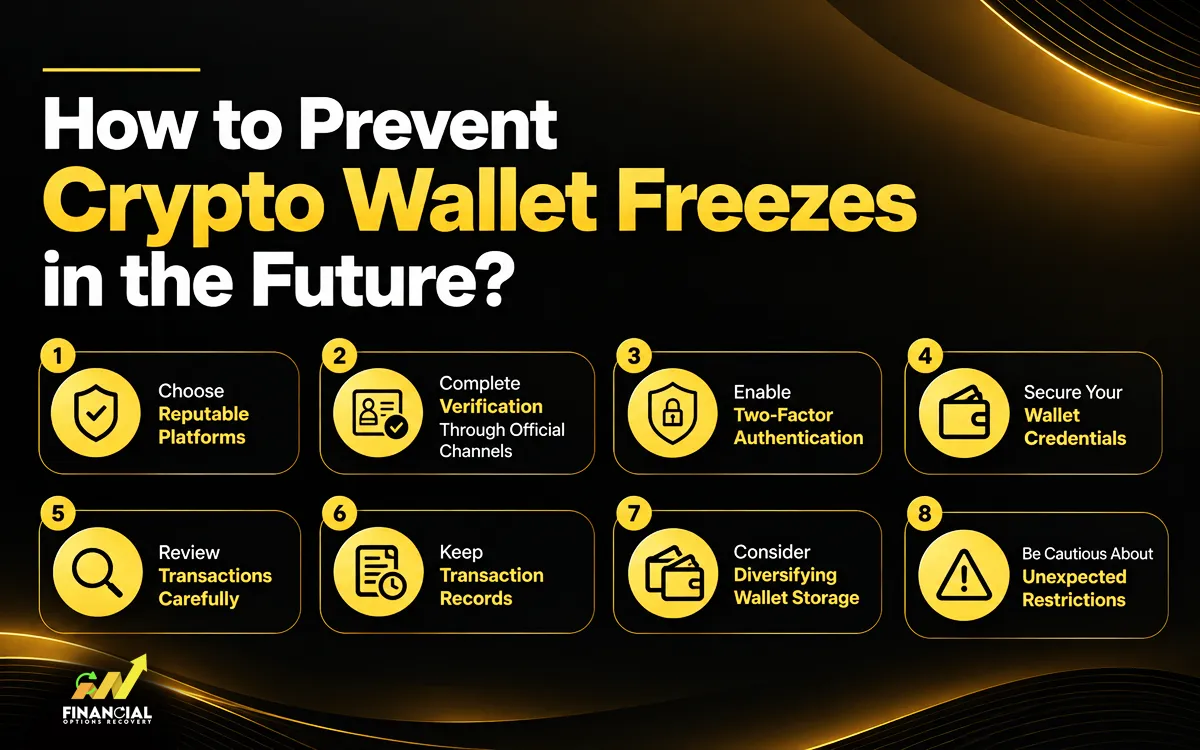
Research an exchange or custodial wallet provider before depositing funds. Check its regulatory status where applicable, security practices, withdrawal policies, and official support channels. Avoid platforms that make unrealistic promises or provide little information about their operations.
Complete KYC and other required verification through the platform's official website or application. Keep your account information accurate and respond to legitimate verification requests. Never send sensitive credentials through an unsolicited message.
Use two-factor authentication (2FA) to add another layer of protection to your account. Use a strong, unique password and avoid clicking unknown links or signing into your wallet through suspicious websites.
Protect private keys and recovery phrases carefully. Never share them with customer support, recovery agents, or anyone claiming they can unlock your wallet. For self-custody wallets, consider secure offline storage for recovery information.
Check the recipient address, network, amount, and transaction details before confirming a transfer. Small errors or sending assets through an unsupported network can create access or recovery problems.
Maintain records of important transactions, including transaction IDs, wallet addresses, dates, amounts, and the network used. These details can be valuable when investigating a disputed or unauthorized transaction.
Keeping all digital assets in one wallet may increase the impact of a security incident. Depending on your needs, separating everyday transactions from longer-term holdings and using cold storage can provide an additional layer of protection.
A sudden withdrawal restriction should not automatically lead to another payment. Verify the reason through the platform's official support channel. Treat unexpected requests for taxes, unlock fees, verification charges, or other payments with caution until their legitimacy is confirmed.
A frozen crypto wallet can have different causes, from routine security checks and verification requirements to technical problems or fraudulent activity. The first step is to understand why access or withdrawals have been restricted rather than assuming that the funds are lost.
Research the platform before using its services, keep your wallet credentials secure, and maintain records of important transactions. When fraud is suspected, avoid sending additional payments and preserve the available evidence. Blockchain records may also help establish how digital assets moved, although tracing does not guarantee recovery.
Understanding common wallet problems and security risks can help you respond more carefully when access to your crypto funds is restricted. When you are unsure why your crypto account is frozen or where your funds have moved, a careful review of the available information can help clarify the situation.
Need guidance on a frozen crypto wallet? Contact us to review your situation and understand the possible next steps.
Not always. Funds may be restricted due to security checks, KYC, compliance reviews, technical issues, or fraudulent activity. Verify the reason through official channels before taking further action.
Scammers may use fake platforms, phishing links, impersonation, unrealistic returns, or fake crypto wallet withdrawal problems. They often create urgency and ask victims to send more money or sensitive wallet information.
Use reputable platforms, enable strong security measures such as 2FA, protect private keys and recovery phrases, and verify wallet addresses before approving transactions.
Do not send additional funds to unlock the wallet, share private keys or recovery phrases, or trust unsolicited recovery offers. Verify the restriction through the platform’s official support channels.
Blockchain transactions are often publicly recorded, so transaction IDs and wallet addresses can be examined to trace the movement of assets. Tracing does not guarantee recovery.
Recovery depends on factors such as how the assets moved, where they were sent, and whether they reached an identifiable service. Quick reporting and complete transaction records may help assess available options.