
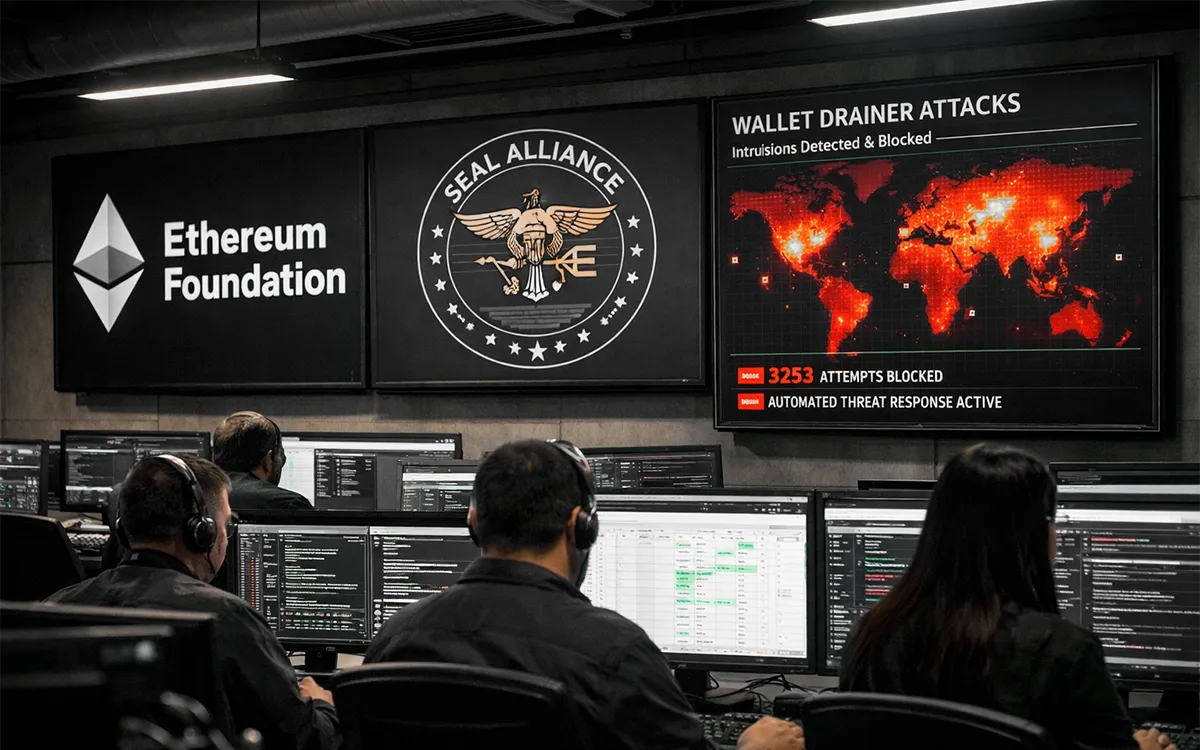
In a move that signals a "zero tolerance" policy for on-chain theft, the Ethereum Foundation (EF) has officially locked arms with the Security Alliance (SEAL). This isn't just a handshake agreement; the EF is now directly sponsoring a specialized security engineer whose "sole mission" is to work within SEAL’s intelligence team to hunt down the predators behind wallet-draining scripts.
This partnership marks the transition of Ethereum security from a "reactive" model (fixing things after they break) to a "proactive" hunt for the attackers themselves.
While Ethereum’s core code is battle-tested, the "human layer" remains the biggest vulnerability. Phishing scammers use sophisticated impersonation and fake protocols to trick users into signing away their assets.
To keep the ecosystem accountable, SEAL and the EF have launched the Trillion Dollar Security (1TS) dashboard. The name reflects Ethereum’s ambition: to be a "civilization-scale" infrastructure capable of securely holding trillions in assets for billions of people.
The dashboard provides real-time transparency into six critical dimensions of the ecosystem
Each of these categories tracks dozens of specific risk controls, ensuring that progress isn't just a marketing claim, but a data-driven reality.
This partnership is a pilot for what SEAL hopes will become an industry-wide standard. By creating a successful "Sponsorship Model" with the Ethereum Foundation, they have built a template that other blockchains can follow.
SEAL has already put out a call to other "forward-thinking ecosystems," inviting them to sponsor similar dedicated intelligence roles. The vision is a unified global defense network where threat intelligence is shared across chains in real-time. The goal? To make the cost of attacking users so high—and the success rate so low—that scammers are forced to find a new line of work.