
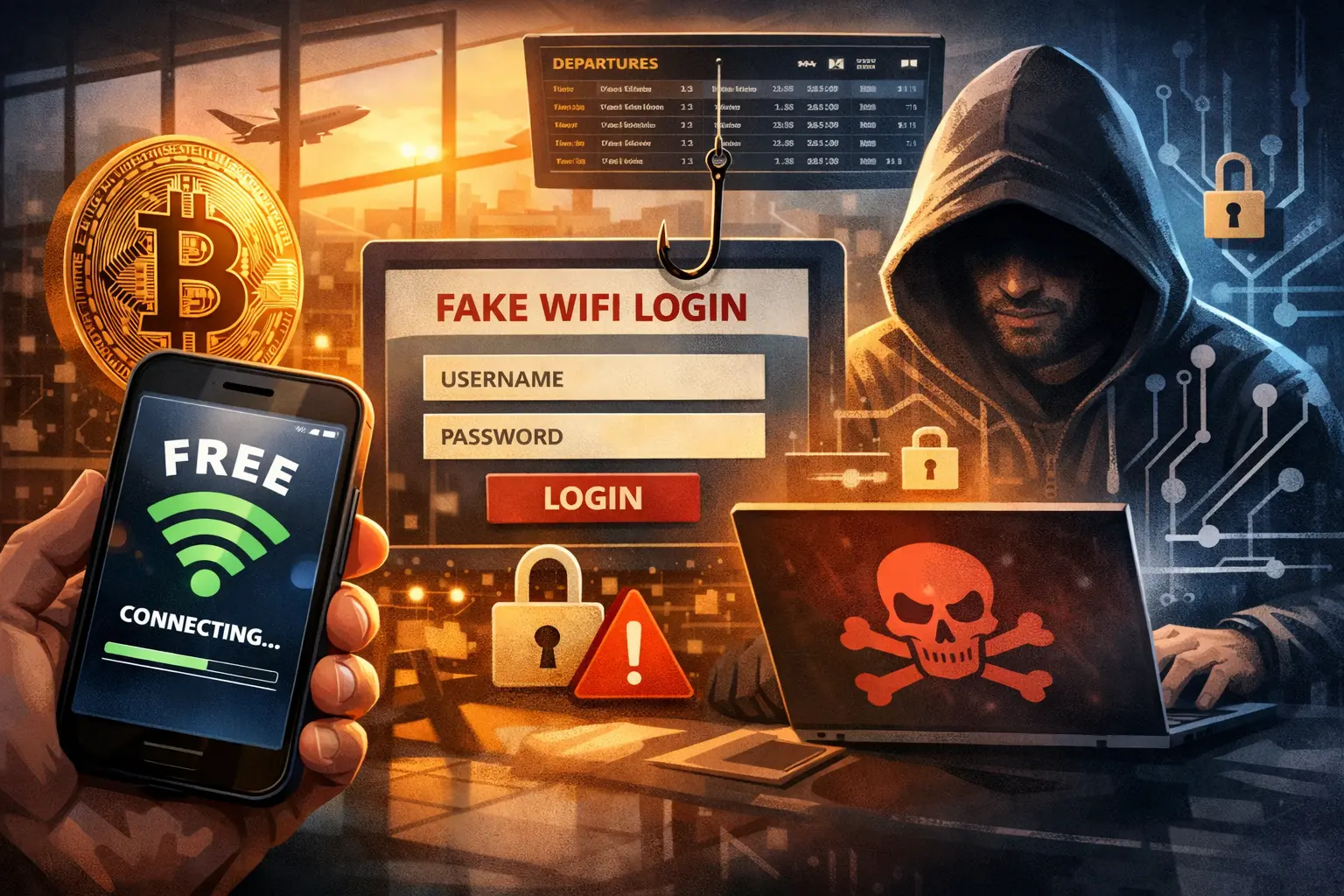
You’ve just landed after a long, exhausting flight. Your phone is hanging on by a thread, SIM card shops are closed, and you need internet fast. The airport’s “free WiFi” pops up, so you connect without thinking twice.
Later that day, you open your wallet and realize your crypto is gone.
This is the kind of situation security experts say is becoming more common, thanks to something known as an “Evil Twin” WiFi attack.
An Evil Twin is a rogue WiFi network that appears nearly similar to a legitimate network. The hackers duplicate the names of the genuine networks that are utilized in airports, cafes, hotels and other locations. When they connect, the attacker has the opportunity to silently monitor the network or redirect the user to counterfeit websites and log-in screens.
These attacks are not based on complicated hacking equipment. They instead exploit the weary travelers, rushed professionals and anybody willing to be online in a hurry.
In 2018, the Australian federal police charged a man who allegedly installed fake free WiFi hotspots in one of Australia's airports. Investigators explained that the activity aimed to obtain personal data on the individuals who thought they accessed a legitimate network.
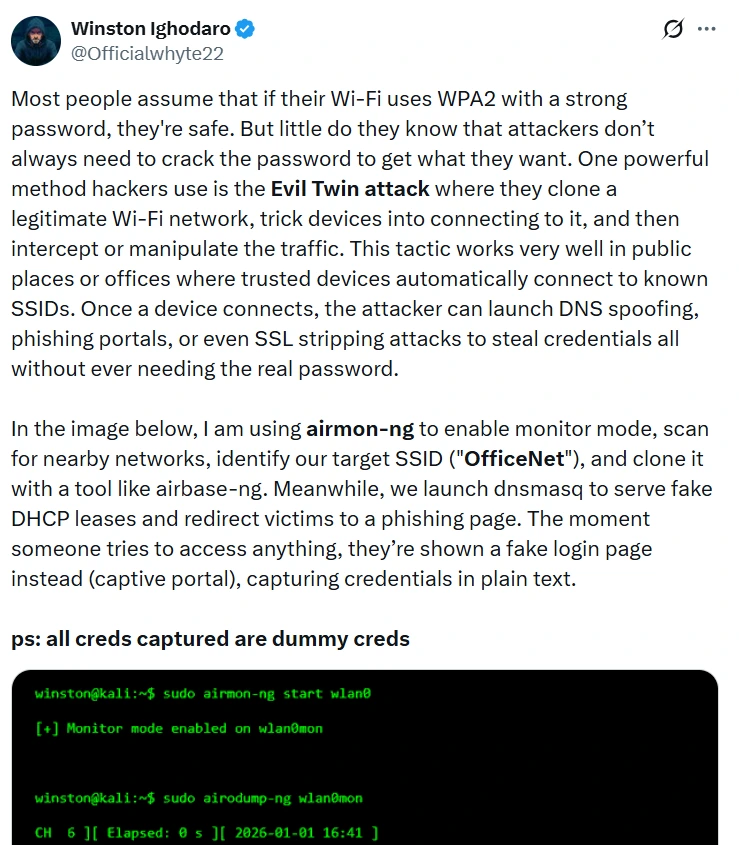
Source: Winston Ighodaro
Cybersecurity experts say this tactic works because many users don’t expect a simple WiFi connection to turn into a serious security issue.
Just joining a fake network won’t automatically empty your crypto wallet. The real danger comes from what you do after connecting.
If attackers capture exchange logins, email access, or two-factor authentication codes, they may be able to take over centralized accounts quickly. In some cases, users are tricked into typing their wallet seed phrase, a mistake that almost always leads to permanent loss.
Security professionals stress that most crypto theft on public WiFi happens through deception, not broken encryption.
After the connection, the victims might be presented with counterfeit logins, pop-ups requesting their account verification, or messages compelling them to install software updates or helpers. These pages tend to work well, and the timing is always right when the users are distracted or are in a hurry.
Experts claim that Evil Twin attacks are successful as they drive individuals to commit minor and expensive errors.
The simplest rule is to avoid handling crypto on public WiFi whenever possible. That means no transfers, no security changes, and no connecting wallets to new apps.
Never enter your seed phrase even if a page looks legitimate. Stick to bookmarked exchange sites or manually type website addresses instead of clicking ads or search results. Always double-check URLs before logging in.
It is much safer to use your personal mobile hotspot than to use a WiWI. Another solution that can be used to prevent the occurrence of your device joining an untrustworthy network without your knowledge is by disabling the automatic WiFi connection.
When there is no other option, other than resorting to public WiFi, utilize a trusted VPN and verify the appropriate network name with personnel before connecting.
Even without a story in the Evil Twin category, recent online news reveals that using public WiFi can still be used to fool users into relinquishing their crypto. The loss is reduced to time, trust, and the wrong click in most situations.